Anti-Seismic Devices

The SEISMIC PROTECTION strategy involves the use of specific devices designed to reduce the seismic stresses transmitted to the structure. This can be achieved either by inserting deformable constraints that affect the response period, shifting it to areas with a more convenient spectral ordinate, or by using dissipative devices capable of absorbing part of the seismic energy and converting it into heat.


The anti-seismic devices we design and we manufacture are:

Elastomeric Isolators – ISI

Elastomeric Isolators With Lead Core – ISI-P

Single or double curved sliding surface isolators 

Shock Transmission Unit – ROD

Devices Dependent On Displacement – RED-AIOS

Fluid-viscous devices type MC and MCL

Elastic Restraint Devices

01

See All Anti-Seismic Devices

Elastomeric Isolators – ISI

7

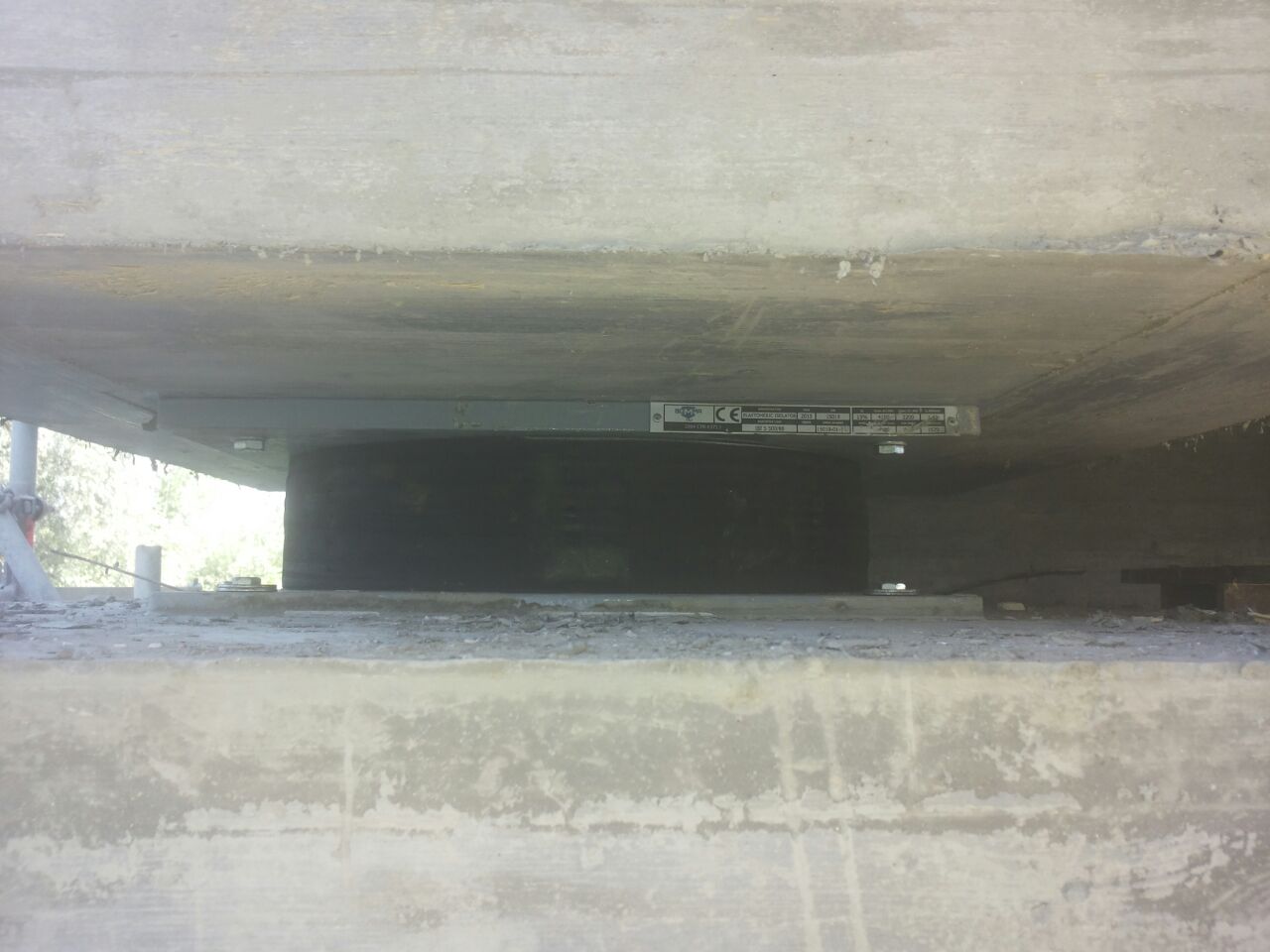
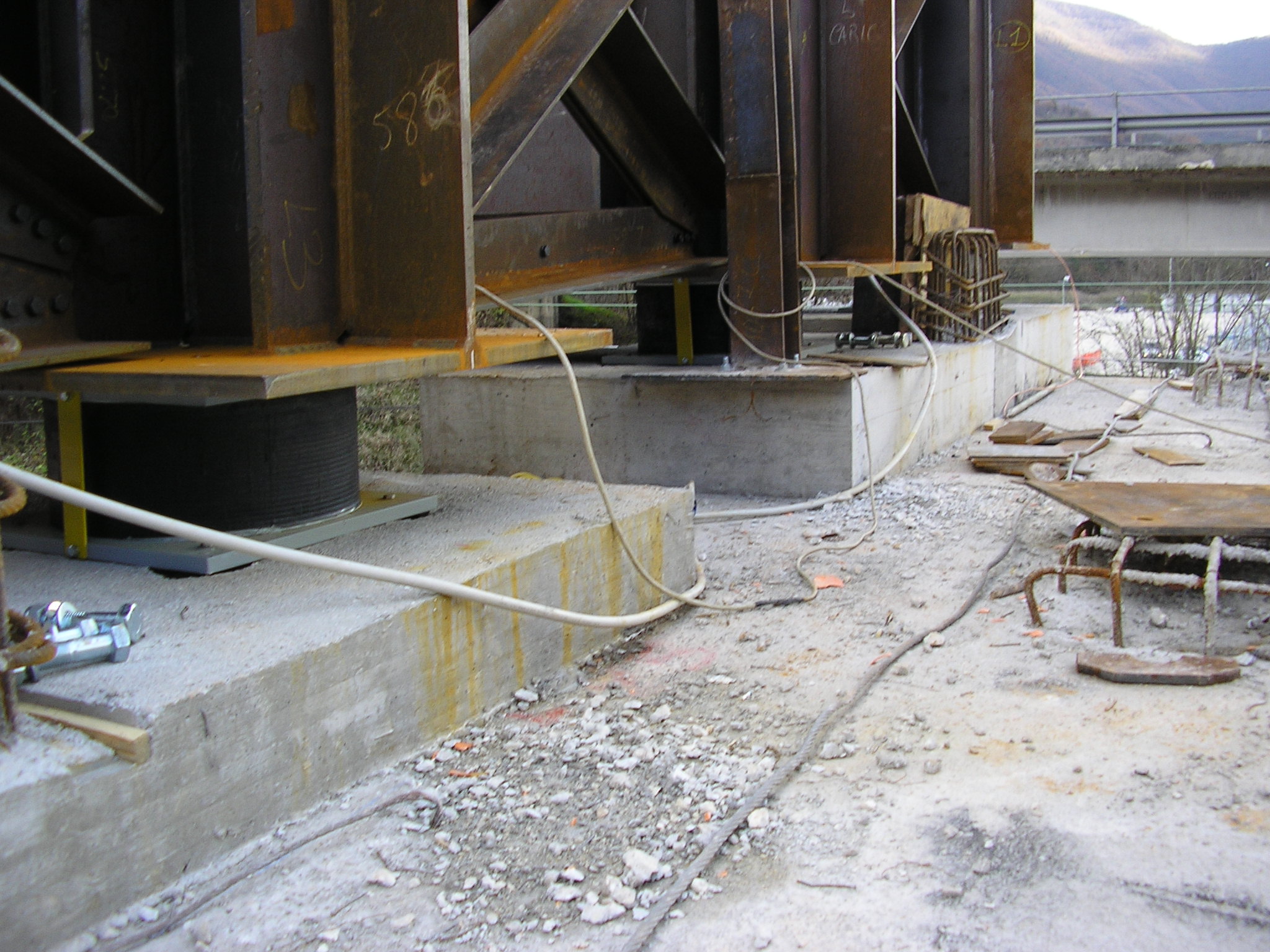
ISI series ELASTOMERIC ISOLATORS consist of layers of rubber alternating with steel plates bonded together through a vulcanization process.This configuration can withstand both vertical and horizontal forces.

They perform a bearing function, with high vertical stiffness, but allow significant in-plane displacements for relatively low forces, thanks to their low horizontal stiffness.

ISI-type devices have good dissipative capacity, with equivalent damping of 10-15%. To cover a wide range of equivalent horizontal stiffnesses, the isolators can be made with three different elastomer compounds with different shear moduli:

G=0.40 MPa (“Soft” compound)
G=0.80 MPa (“Normal” compound)
G=1.40 MPa (“Hard” compound)

Elastomeric Isolators With Lead Core ISI-P

7

The ISI-P series LEAD-CORE ELASTOMERIC ISOLATORS are identical to the ISI series, but contain a central lead core.
The lead core allows the device to achieve a damping level of up to 30%.

Single or Double Curved surface sliding isolators – FP

7

The FP series CURVED SURFACE SLIDE ISOLATORS are devices made of metal elements that create a combination of sliding curved surfaces designed with an appropriate radius of curvature, which determines the period of the isolated structure.

Sliding between the curved surfaces occurs through the coupling of a surface made of a specific low-friction material with stainless steel.
They can be made with single or double curvature.
The damping coefficient ranges from 15% to 40%.

Shock Trasmission Unit – ROD

7

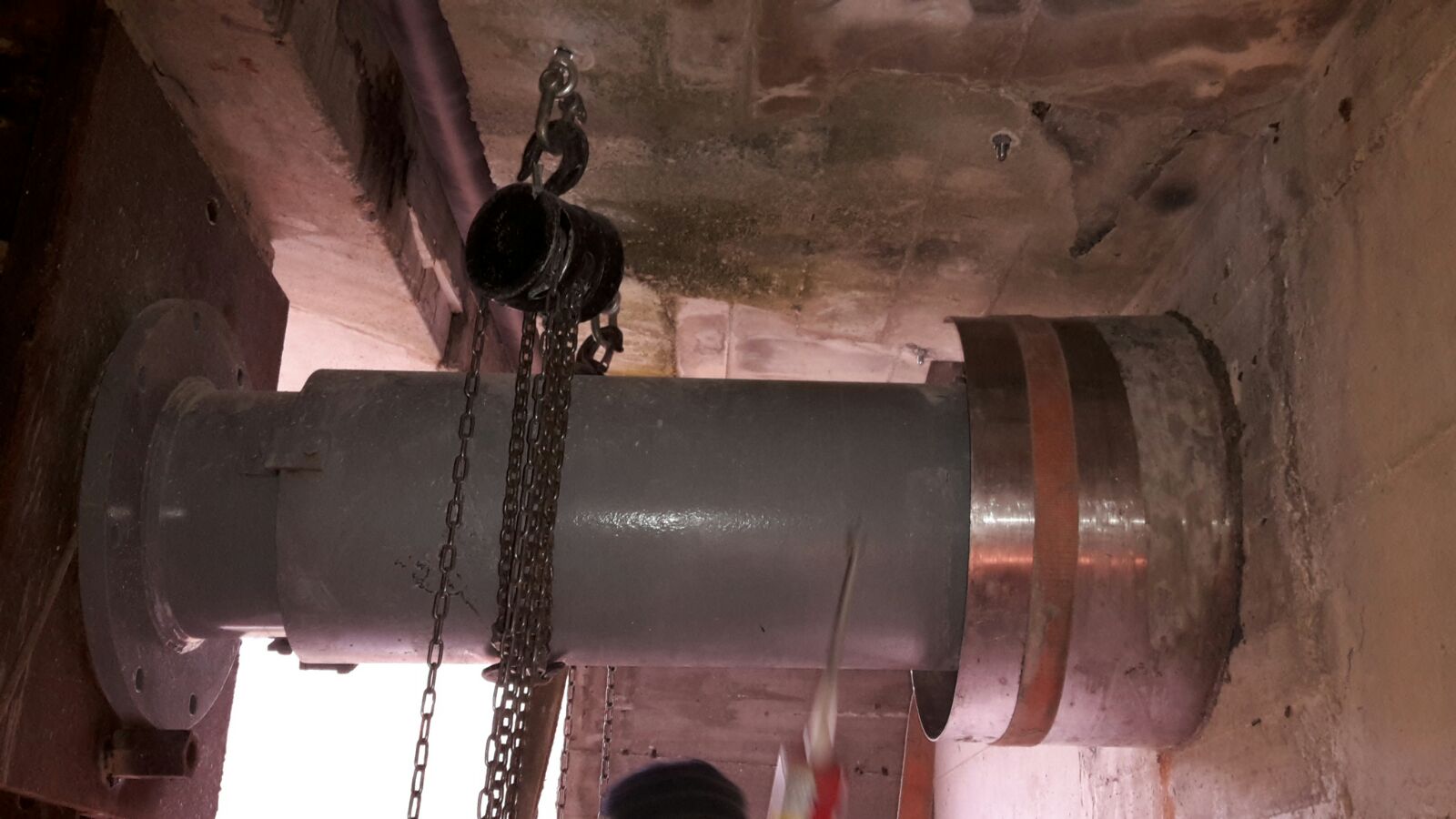
The ROD series DYNAMIC COUPLING DEVICES are temporary constraint fluid-dynamic devices or shock transmitter units (STUs). The ROD device allows slow displacements for low reaction forces and acts as a fixed constraint for impulsive forces. Its behavior is symmetrical with respect to the intermediate position, both in terms of reaction and displacement. This type of operation is due to the presence of a piston inside the steel jacket that divides two chambers containing hydraulic fluid and connected by a calibrated valve.

The connection to the structure is via two spherical hinges, which allow rotation around any axis: the device behaves like a connecting rod, capable of transmitting forces only along its own axis.

Devices Dependent On Displacement RED – AIOS

7

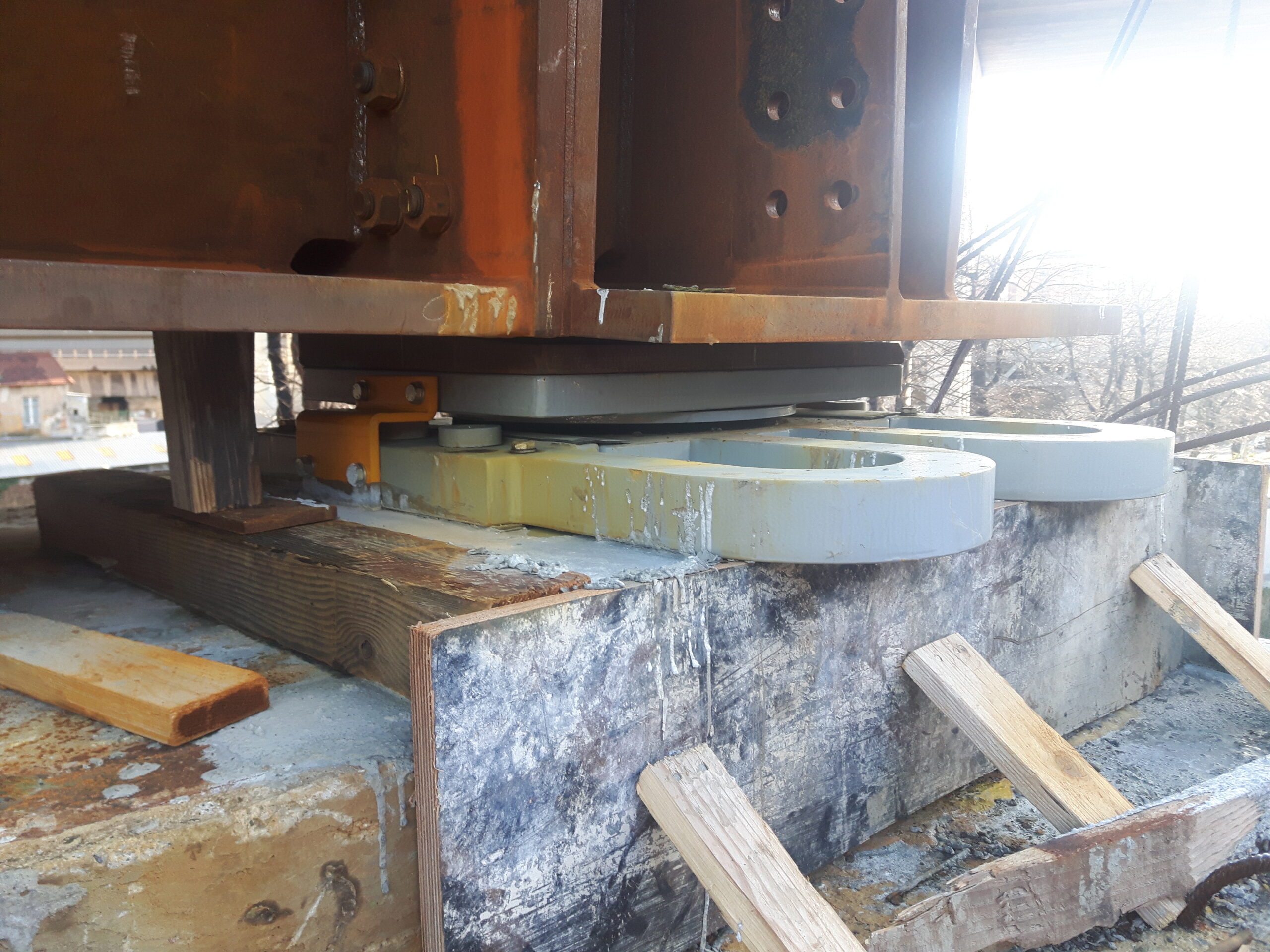
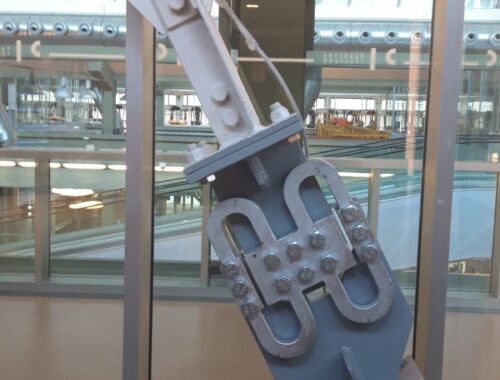
The RED and AIOS series of ELASTOPLASTIC STEEL DEVICES are devices with nonlinear, displacement-dependent NDL behavior. They exploit the hysteretic properties of steel to dissipate energy. They consist of a series of steel elements designed to deform plastically under seismic action.

The RED type is a seismic restraint made with crescent-shaped elements and acts in a single horizontal direction.
The AIOS type is a combination of a bearing device and steel hysteretic elements. The C-shaped elements that act as dissipators can be positioned in a single horizontal direction or in both, thus giving the device unidirectional or bidirectional behavior.

Viscous Dampers – MC and MCL

7

The MC – MCL series VISCOUS DAMPERS are velocity-dependent devices.

The device’s behavior depends on velocity according to the following law:

F = Cvα
Where:
F = force
C = damping constant
v = velocity
α = exponent with values ​​between 0.10 and 0.5

Its behavior is symmetrical with respect to the intermediate position, both in terms of reaction and displacement. This type of operation is due to the presence of a piston inside the steel jacket that divides two chambers containing hydraulic fluid and connected by a calibrated valve.

The connection to the structure is via two spherical hinges, which allow rotation around any axis: the device behaves like a connecting rod, capable of transmitting forces only along its own axis.

Dissipative Bracing – HBF

7

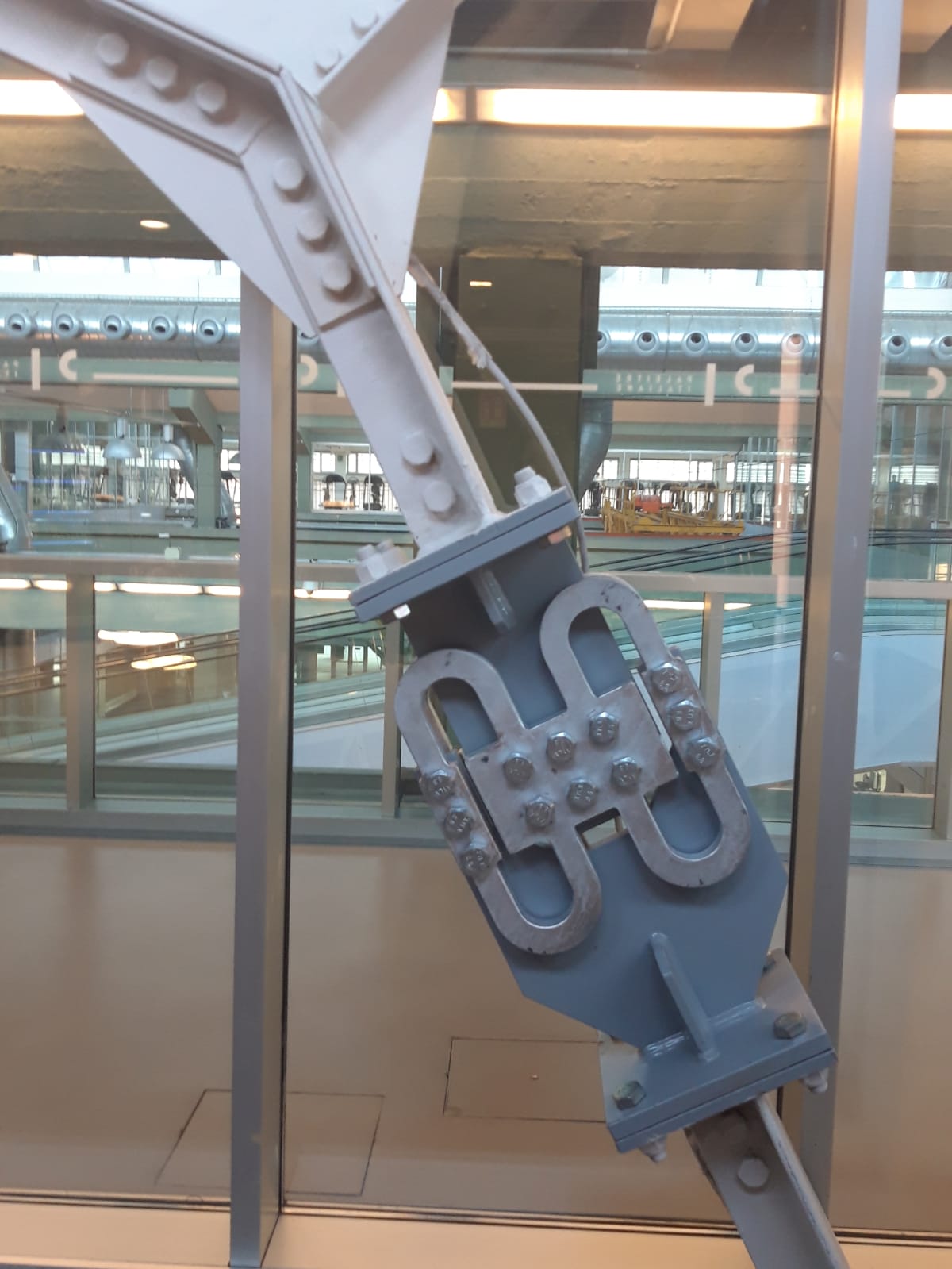
HBF series dissipative bracing systems are often used for seismic retrofitting and improvement of existing buildings, providing passive protection that increases the structural strength and rigidity. These systems consist of a single or pair of steel plates designed and manufactured to concentrate inelastic deformations in specific areas, ensuring excellent levels of energy dissipation.

The procedure involves inserting the HBF device into the structural bracing mesh, which serves as a connection between the frame node and the bracing.
This type of procedure is generally minimally invasive, as the elements are inserted within the frame mesh. The elements can be left exposed or covered with paneling.
Replacement after a seismic event is easy and cost-effective; simply leave a niche in the wall and replace only the plasticized dissipative element, without further intervention on the structure or the bracing rod.

Dispositivi anti martellamento – RPL

7

Il dispositivo RPL è un ritegno sismico meccanico a doppio effetto caratterizzato da una rigidezza elastica bilineare. È capace di trasmettere alle strutture una forza di reazione minima sia in trazione che in compressione fino ad uno spostamento ben definito, generalmente il movimento dovuto alla dilatazione termica, per poi irrigidirsi repentinamente evitando il martellamento delle strutture.

La sua applicazione è particolarmente idonea su edifici con giunti termici insufficienti ai movimenti sismici in sostituzione dei più comuni Shock transmitter. Rispetto a questi, gli RPL sono più economici e “maintenance free”.
È un dispositivo di vincolo elastico e quindi privo di capacità smorzante.

Tuned Mass Damper – TMD

7

Gli smorzatori a massa accordata o TMD sono dispositivi applicati su strutture particolarmente flessibili come edifici alti o passerelle per attenuare le vibrazioni dovute al sisma, al vento o altre azioni dinamiche.

Il TMD si realizza collegando alla massa principale una massa aggiuntiva per mezzo di un sistema di molle elastiche e smorzatori viscosi.

Sugli edifici il TMD può essere facilmente realizzato (oltre che con l’inserimento di una massa aggiuntiva), utilizzando come massa quella degli ultimi piani dell’edificio stesso (o altra massa strutturale) inserendo un sistema di dispositivi elastici+dissipatori. Il TMD in tal caso è assimilabile ad un sistema di isolamento, inserito non alla base ma ad un livello superiore.

Dispositivi elastici – REG-ELB

7

I dispositivi elastici (LD) sono caratterizzati da a comportamento lineare o quasi lineare sono generalmente realizzati con elementi elastomerici e piastre metalliche di contrasto e di interfaccia e collegamento alla struttura.

Il tipo REG è un dispositivo elastico lineare a doppio effetto unidirezionale. È realizzato disponendo dischi elastomerici in serie che lavorano in compressione ed una serie di tiranti in acciaio che conferiscono al dispositivo completo una risposta simmetrica a doppio effetto.
Il tipo ELB è un dispositivo elastico quasi-lineare a semplice effetto unidirezionale. È realizzato disponendo elementi elastomerici all’interno di una struttura metallica che ha la funzione di comprimere la gomma in funzione dei movimenti tra le due strutture alle quali è connessa.

Dispositivi Antisismici

La strategia di PROTEZIONE SISMICA consiste nell’utilizzo di particolari dispositivi il cui scopo è di ridurre le sollecitazioni sismiche trasmesse alla stessa. Ciò può avvenire o con l’inserimento di vincoli deformabili che agiscono sul periodo di risposta, in modo da poterlo ‘spostare’ verso zone ad ordinata spettrale più conveniente oppure con l’utilizzo di dispostivi con capacità dissipative in grado di assorbire parte dell’energia sismica trasformandola in calore.

I dispositivi antisismici che progettiamo e produciamo sono:

  • Isolatori in gomma armata HDRB tipo ISI
  • Isolatori in gomma armata con nucleo in piombo LRB tipo ISI-P
  • Isolatori a pendolo scorrevole
  • Dispositivi di accoppiamento dinamico tipo ROD
  • Dispositivi elastoplasitci in acciaio tipo RED e tipo AIOS
  • Dispositivi dipendenti dalla velocità tipo FVD
  • Controventi dissipativi tipo HBF

Scopri tutti i nostri prodotti:

Altri prodotti: